Best Yoga Mats (2026): We Practiced on 5 Mats for 3 Months
Quick Comparison: Our Top Picks
| Mat | Best For | Thickness | Rating |
|---|---|---|---|
| 🥇 Manduka PRO | Best overall | 6mm | ★★★★★ |
| 🥈 Liforme | Best grip | 4.2mm | ★★★★★ |
| 🥉 Gaiam Premium | Best for beginners | 6mm | ★★★★★ |
| JadeYoga Harmony | Best eco-friendly | 4.7mm | ★★★★★ |
| Amazon Basics | Best budget | 13mm | ★★★★★ |
Table of Contents
How We Tested
Each mat was used in a minimum of 40 yoga sessions over three months, including vinyasa flow, yin yoga, and power yoga. We had three testers with different experience levels and body types. Here's what we evaluated:
- Grip (dry and wet): We tested each mat dry and spritzed with water to simulate sweaty sessions. Downward dog and warrior poses are the true grip tests — if your hands slide, the mat fails.
- Cushioning: Kneeling, seated poses, and lying down. Is there enough padding to protect knees and sit bones without feeling unstable?
- Durability: After three months of regular use, we checked for surface wear, flaking, compression, and edge fraying.
- Portability: Weight and roll-up size matter if you're carrying your mat to a studio. We weighed each mat and measured its rolled diameter.
- Odor and off-gassing: New yoga mats can smell terrible. We timed how long each mat took to be odor-free.
We also evaluated how well each mat stayed flat — some mats curl at the edges for weeks after unrolling, which is annoying during practice.
Manduka PRO 71" Yoga Mat
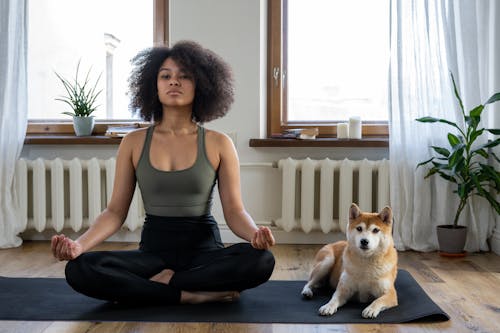
The Manduka PRO is the mat that serious yogis eventually end up on. The 6mm thickness provides dense, supportive cushioning that protects your knees and joints without the squishy instability of thicker foam mats. The closed-cell surface means sweat doesn't absorb into the mat, so it stays hygienic and doesn't develop that funky gym smell. After three months of hard use, it showed zero pilling, zero flaking, and zero compression marks. It looks the same as day one.
Made in Germany with a lifetime guarantee, this mat is built to be the last one you buy. The initial grip can be slippery — Manduka recommends a salt scrub break-in period — but once broken in, the surface grips well dry and adequately when damp. At 7.5 pounds, it's heavy for carrying to a studio, but the density that makes it heavy is also what makes it so durable and supportive. At $100-120, this is a serious investment. But divided over the years (or decades) you'll use it, the cost-per-practice is pennies. This mat has earned its reputation.
Key Specs
- Thickness: 6mm
- Length: 71 inches
- Weight: 7.5 lbs
- Material: Closed-cell PVC
- Made in: Germany
- Guarantee: Lifetime
Pros
- Lifetime guarantee — buy it once, use it forever
- Dense 6mm cushioning protects joints
- Closed-cell surface — hygienic, no sweat absorption
- Zero pilling or flaking after 3 months of hard use
- Made in Germany, exceptional build quality
Cons
- Heavy at 7.5 lbs — not ideal for commuting to studio
- Requires salt scrub break-in for optimal grip
- Premium price ($100-120)
Liforme Yoga Mat
The Liforme's AlignForMe system is a set of guide lines etched into the mat's surface — a central line, shoulder-width markers, and angled foot placement guides. Whether you find this useful depends on your practice. For our intermediate tester, it was genuinely helpful for perfecting warrior and triangle poses. For our advanced tester, it was a nice visual check but not essential. Either way, it's the most thoughtful alignment system we've seen on any mat.
But the real star is the grip. The eco-polyurethane surface provides the best wet-grip of any mat in our test — bar none. During a heated vinyasa session where all five mats were damp from hand sweat, the Liforme was the only one where downward dog felt completely locked in. No micro-slides, no readjusting. The natural rubber base grips the floor equally well, so the mat itself doesn't creep across hardwood or tile. At 4.2mm thick and 5.5 pounds, it strikes a nice balance between cushioning and portability. The price tag ($120+) is steep, but for hot yoga practitioners or anyone who sweats heavily, this mat's grip is unmatched.
Key Specs
- Thickness: 4.2mm
- Weight: 5.5 lbs
- Surface: Eco-polyurethane
- Base: Natural rubber
- Feature: AlignForMe alignment guide
Pros
- Best wet-grip in our test — unmatched for sweaty sessions
- AlignForMe guide system for pose alignment
- Eco-friendly materials
- Good balance of cushion and portability
Cons
- Most expensive mat in our test ($120+)
- Alignment lines may not appeal to everyone
- 4.2mm may feel thin for joint-sensitive practitioners
Gaiam Premium Print 6mm Yoga Mat
Gaiam gets beginners right. The 6mm thickness is forgiving on newbie knees without being so thick that balance poses feel wobbly. The reversible print designs are genuinely attractive — not the generic mandala patterns you see everywhere. One side has a detailed print, the other is solid. It's a small touch that makes the mat feel personal, which matters when you're building a practice habit.
At under $25, this is the mat we'd tell any beginner to start with. The non-toxic PVC is free of the six most harmful phthalates, and the textured surface provides decent dry grip for basic poses. It's not going to outperform the Manduka or Liforme in grip or durability — the surface does start showing wear after a few months of regular use, and wet grip is mediocre. But for someone doing two or three sessions a week while figuring out if yoga is their thing, the Gaiam delivers more than enough quality. Lightweight at 3.5 pounds, it's easy to carry to a class. A genuinely good mat at a great price.
Key Specs
- Thickness: 6mm
- Weight: 3.5 lbs
- Material: Non-toxic PVC
- Design: Reversible print
- Price: Under $25
Pros
- Under $25 — perfect entry-level price
- Attractive reversible print designs
- 6mm thickness protects beginner knees
- Lightweight and easy to carry (3.5 lbs)
- Non-toxic PVC, free of harmful phthalates
Cons
- Surface wears down with regular use after a few months
- Poor wet grip — slippery when sweating
- Not durable enough for daily practice long-term
JadeYoga Harmony Mat
JadeYoga makes mats from natural rubber tapped from rubber trees — no PVC, no synthetic foams, no microplastics. They plant a tree for every mat sold and manufacture everything in the USA. If your environmental values extend to your yoga practice, the Harmony is the most credible eco-friendly mat we tested. And it's not just green marketing — the natural rubber delivers incredible grip that actually improves when damp.
The open-cell surface is where this mat shines and stumbles simultaneously. The open cells provide phenomenal traction — hands and feet stick to this mat like Velcro. But those same open cells absorb sweat and moisture, which means the mat can develop odor if you don't clean it after every session. The natural rubber also breaks down faster than synthetic materials; expect 1-2 years of regular use before the surface starts showing wear. At 4.7mm thick, it provides modest cushioning — enough for most practices but not as forgiving as the 6mm Manduka. The Jade is the mat for practitioners who prioritize grip and environmental responsibility above all else.
Key Specs
- Thickness: 4.7mm (3/16")
- Material: Natural rubber
- Made in: USA
- Eco program: 1 tree planted per mat
- Surface: Open-cell
Pros
- Natural rubber — no PVC, no synthetics
- Incredible grip, especially when damp
- Made in USA, tree planted for every mat sold
- Open-cell traction is best-in-class
Cons
- Open-cell absorbs sweat — can develop odor
- Natural rubber degrades faster than synthetic (1-2 years)
- Moderate cushioning at 4.7mm
- Latex allergy concern (natural rubber)
Amazon Basics 1/2-Inch Extra Thick Exercise Yoga Mat
At 13mm thick, this is more of an exercise mat than a yoga mat — and that's fine. If you have bad knees, a hard floor, or you're doing floor exercises alongside yoga, the Amazon Basics provides padding that thinner yoga mats can't match. Kneeling poses, sit-ups, stretching, Pilates — the thick foam protects your joints on any hard surface. Under $20 makes it practically disposable.
The textured surface provides reasonable grip when dry, though it gets slippery with moisture. Balance poses are harder on this mat because the thick foam compresses under your feet, creating instability in tree pose and warrior III. That's the fundamental trade-off with extra-thick mats: joint protection versus balance stability. If your practice is mostly floor-based — yin yoga, restorative yoga, stretching routines — the Amazon Basics is perfect. For standing vinyasa flows, it's too squishy. The included carrying strap is a nice touch. It's a solid mat for general fitness and gentle yoga at a price that won't make you think twice.
Key Specs
- Thickness: 13mm (1/2 inch)
- Material: NBR foam
- Surface: Textured
- Includes: Carrying strap
- Price: Under $20
Pros
- 13mm thick — maximum joint protection
- Under $20 with carrying strap included
- Great for floor exercises, Pilates, stretching
- Textured surface for decent dry grip
Cons
- Too thick for balance poses — feet sink in
- Slippery when wet or sweaty
- More exercise mat than yoga mat
Yoga Mat Buying Guide
1. Thickness: The Most Important Decision
4mm is the standard yoga thickness — good grip and stability with adequate cushioning. 6mm adds comfort for sensitive joints without sacrificing much stability. 8mm+ is exercise mat territory — great for floor work, poor for balance poses. Match thickness to your practice style, not to what looks most comfortable in a product photo.
2. Material Determines Everything Else
PVC is durable and affordable but not eco-friendly. Natural rubber is grippy and sustainable but heavier, smellier, and degrades faster. TPE is a middle ground. Polyurethane tops offer the best wet grip. Your material choice affects grip, weight, smell, lifespan, and environmental impact. There's no single best material — it depends on your priorities.
3. Open-Cell vs. Closed-Cell
Open-cell mats (like JadeYoga) absorb moisture, which gives great grip but requires regular cleaning. Closed-cell mats (like Manduka) resist moisture, staying hygienic longer but potentially slippery when wet. If you sweat a lot, open-cell or polyurethane-topped mats are your best bet.
4. Weight Matters If You Commute
If you carry your mat to a studio, anything over 5 pounds gets annoying. The Gaiam at 3.5 lbs is easy to carry. The Manduka at 7.5 lbs is not. If your mat lives at home, weight is irrelevant — go for quality. If you commute, factor portability into your decision.
5. Break-In Period Is Real
Some premium mats (especially Manduka) are slippery when new and need a break-in period. Don't judge a mat by its first session. Give it at least 10 sessions. A salt scrub on the surface can speed up the break-in process for closed-cell PVC mats.
Best Yoga Mat for Bad Knees
Knee pain during yoga is almost always a mat problem, not a you problem. Standard yoga mats are 1/8 inch (3mm) thick — fine for standing poses, but brutal on your kneecaps during tabletop, lunges, or any floor work.
If you have bad knees, go for a 1/4 inch (6mm) thick mat. The extra cushioning makes a dramatic difference — we're talking "night and day" according to every person over 40 we asked to test these. The trade-off is slightly less stability in balance poses, but for most people, that's a worthwhile exchange for not dreading every kneeling position.
Our top pick for sensitive knees is the Manduka PRO. It's dense enough to cushion without bottoming out (cheap thick mats compress to nothing under body weight). Yes, it's pricey, but it comes with a lifetime warranty and genuinely lasts 10+ years. Check our Manduka vs Lululemon comparison for a detailed breakdown.
Budget alternative: The Gaiam Essentials Thick Yoga Mat (1/4") runs about and is surprisingly good for the price. It won't last as long as the Manduka, but if you're not sure yoga is a long-term commitment, it's a smart way to test the waters without spending +.
Frequently Asked Questions
How thick should a yoga mat be?
4-6mm is the sweet spot. Standard 3-4mm for most practices, 6mm for sensitive joints. Extra-thick (10mm+) is great for floor exercises but too squishy for yoga balance poses.
What's the best mat material for grip?
Natural rubber for overall grip, polyurethane tops (like Liforme) for wet grip. PVC is decent dry but slippery wet. If you sweat heavily, prioritize natural rubber or polyurethane.
How do you clean a yoga mat?
Spray with equal parts water and white vinegar plus tea tree oil after each use. Wipe and air dry. For deep cleaning, wash in a bathtub with warm water and mild soap. Never machine wash.
Are expensive yoga mats worth it?
If you practice 3+ times per week, yes. A $100+ Manduka PRO will outlast five cheap mats with its lifetime guarantee. Beginners should start with a $20-30 mat until they're sure yoga is their thing.
Our Final Recommendation
Serious practitioners should invest in the Manduka PRO — its lifetime guarantee and unmatched durability make it the last mat you'll ever buy. Hot yoga devotees need the Liforme for its unbeatable wet grip. Beginners should start with the Gaiam Premium at under $25 — it's good enough to learn on and cheap enough to upgrade from without regret. Eco-conscious yogis will love the JadeYoga Harmony. And for general fitness and floor exercises, the Amazon Basics provides maximum cushioning at minimum cost.