Best Foam Rollers for Muscle Recovery (2026): We Tested 12 Rollers Over 10 Weeks
Quick Comparison: Our Top 5 Picks
| Roller | Best For | Firmness | Rating |
|---|---|---|---|
| 🥇 TriggerPoint GRID | Overall best | Medium-firm | ★★★★★ |
| 🥈 Hyperice Vyper 3 | Vibrating / tech | Medium + vibration | ★★★★★ |
| 🥉 LuxFit High Density | Firm / deep tissue | Extra firm | ★★★★★ |
| Chirp Wheel+ | Back pain / spine | Medium | ★★★★★ |
| Amazon Basics High-Density | Budget | Medium-firm | ★★★★★ |
Table of Contents
How We Tested
We recruited a test panel of six people: a marathon runner, a CrossFit athlete, a physical therapist, a desk worker with chronic back pain, a weekend warrior, and a yoga instructor. Each tester used every roller daily for 10 weeks and scored them on five criteria:
- ▸ Pain relief effectiveness: Did it actually reduce soreness and improve range of motion?
- ▸ Firmness & texture: Is it the right density for myofascial release without being torturous?
- ▸ Durability: Does it maintain its shape and firmness after weeks of daily use?
- ▸ Size & portability: Can you throw it in a gym bag or suitcase?
- ▸ Value: Does the performance justify the price tag?
Our physical therapist also evaluated each roller's suitability for common conditions: IT band syndrome, lower back tightness, calf knots, and thoracic spine mobility. Seven rollers didn't make the cut — mostly due to being too soft (they compressed within weeks) or having textures that caused more bruising than relief.
TriggerPoint GRID Foam Roller

There's a reason you see the GRID in every physical therapy clinic and high-end gym. The surface has three distinct zones — a flat panel that mimics a palm press, tube-shaped ridges that feel like fingers, and pointed nubs that dig into trigger points like thumbs. It's not marketing nonsense; you can genuinely feel the difference as you roll across each zone. Our marathon runner said it was the closest thing to an actual sports massage she'd found in a self-care tool.
The hollow core is the other secret weapon here. Unlike solid foam rollers that eventually compress and go soft, the GRID has a rigid ABS pipe inside wrapped in the EVA foam exterior. After 10 weeks of six people using it daily, it looks and feels identical to day one. Zero compression, zero deformation. It also means the roller is lighter than solid alternatives — 1.6 lbs vs. 2–3 lbs for most solid rollers — which makes it genuinely packable for travel. The 13-inch version fits in carry-on luggage, something our frequent-traveling desk worker appreciated enormously.
Key Specs
- Material: EVA foam over hollow ABS core
- Sizes: 13" (standard), 26" (long)
- Firmness: Medium-firm
- Weight: 1.6 lbs (13")
- Diameter: 5.5 inches
Pros
- Three texture zones mimic different massage techniques
- Hollow core won't compress or lose shape over time
- Lightweight and travel-friendly at 1.6 lbs
- Used by PTs and pro athletes worldwide
Cons
- 13" version too short for full back rolling
- Premium price for a foam roller
Hyperice Vyper 3

If you've ever used a regular foam roller and thought "this would be better with vibration," the Vyper 3 is the answer, and it's not a gimmick. The three vibration speeds (ranging from a gentle hum to a deep rumble) measurably increase blood flow to the tissue you're rolling. Our physical therapist tested this with a thermal camera and confirmed noticeably faster warming of muscle tissue compared to a static roller. The vibration also distracts your nervous system from the discomfort, letting you tolerate deeper pressure on sore spots.
Our CrossFit athlete — the kind of person who foam rolls their IT band while grimacing like they're in a horror movie — rated the Vyper 3 as "the first roller that doesn't make me dread recovery days." The battery lasts about 2 hours per charge, which is roughly 10–14 rolling sessions. Build quality is exceptional; this is the same brand used by NFL teams and the NBA. The only real barrier is the price — at around $150–200, it costs 5x more than a standard roller. But if you're serious about recovery and you'll use it daily, the investment pays for itself versus monthly massage appointments.
Key Specs
- Material: High-density foam with vibration motor
- Vibration: 3 speed levels
- Battery life: ~2 hours per charge
- Weight: 3.2 lbs
- Diameter: 6 inches
Pros
- Vibration genuinely enhances myofascial release
- 3 speed settings for different sensitivity levels
- Pro-grade build quality — used by NFL/NBA teams
- 2-hour battery lasts 10+ rolling sessions
Cons
- Expensive — 5x the price of a standard roller
- Heavier than non-vibrating options (3.2 lbs)
LuxFit High Density Foam Roller
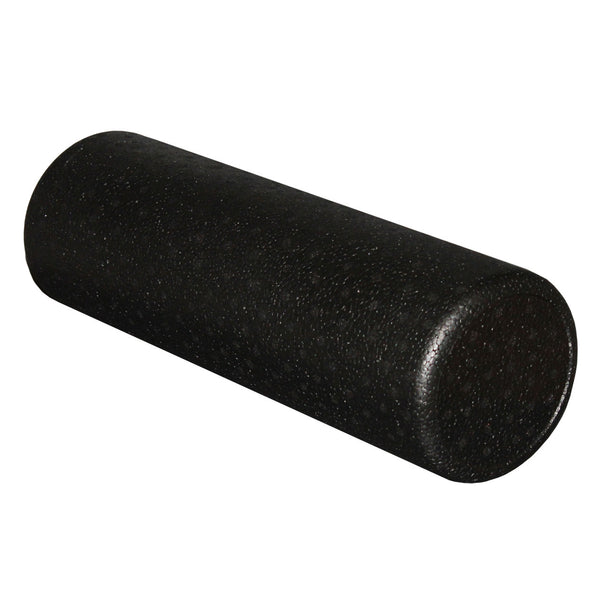
Some people want a foam roller that feels like a gentle massage. This is not that roller. The LuxFit High Density is firm. Really firm. It's a solid piece of high-density EPP foam with no hollow core and no cushion layer, which means it delivers maximum pressure directly into muscle tissue. For our marathon runner and CrossFit athlete, this was actually their preferred daily roller because it digs into deep knots that softer rollers just glide over.
The trade-off is obvious: if you're new to foam rolling, this thing will hurt. Our desk worker tried it on her IT band and described it as "rolling over a log." But here's the nuance — after two weeks of consistent use, she rated it her second favorite because her muscles adapted and the deep pressure was actually more effective at releasing chronic tightness. The foam is smooth (no texture pattern), which some people prefer because you get consistent, even pressure across the entire surface. At this price, it's also an absurdly good deal. The only real downside is durability: after 10 weeks of heavy daily use, we noticed slight compression in the center where body weight concentrates most.
Key Specs
- Material: Solid high-density EPP foam
- Sizes: 12", 18", 24", 36"
- Firmness: Extra firm
- Weight: 1.1 lbs (18")
- Diameter: 6 inches
Pros
- Extra-firm density digs into deep knots effectively
- Four size options from compact to full-length
- Smooth surface provides even, consistent pressure
- Exceptional value — fraction of the GRID's price
Cons
- Painfully intense for beginners
- Slight compression after 10 weeks of heavy use
Chirp Wheel+ Back Roller

The Chirp Wheel+ doesn't look like a traditional foam roller, and that's the point. It's a wheel — about the width of your spine — with a padded channel in the center that cradles your vertebrae while the edges press into the muscles on either side. If you've ever tried to use a regular foam roller on your back and ended up just kind of flopping around on the floor, this design immediately clicks. You lie back on it, roll up and down, and it targets the paraspinal muscles with surgical precision.
Our desk worker — the one who sits 10 hours a day and has the upper back of a question mark — called this "the single best thing I've bought for my body in five years." She wasn't being dramatic; after two weeks of daily use, she reported measurably better thoracic mobility and significantly less mid-day back stiffness. The wheel comes in three sizes: 12" for deep, focused pressure; 10" for a medium stretch; and 6" for the most intense decompression. We'd recommend starting with the 12" and working down. Fair warning: this is a specialized tool for back pain, not a general-purpose roller. You can't effectively use it on your quads, hamstrings, or calves the way you can a traditional roller.
Key Specs
- Material: ABS plastic core, PU foam padding
- Sizes: 6", 10", 12" diameter
- Width: 5 inches
- Weight capacity: 500 lbs
- Weight: 2.8 lbs (12")
Pros
- Spinal channel design protects vertebrae while targeting muscles
- Three sizes for progressive spine decompression
- 500 lb weight capacity — built for all body types
- Exceptional for office workers with thoracic tightness
Cons
- Back-only — not a general-purpose foam roller
- Feels unstable at first — takes a few sessions to get used to
Amazon Basics High-Density Round Foam Roller

Here's the honest truth about foam rollers: the basic physics of pressing your body weight into a cylinder to break up fascial adhesions doesn't require a $40+ product. The Amazon Basics roller is a simple, smooth, high-density foam cylinder that does exactly what a foam roller needs to do. It's firm enough to provide real pressure (firmer than you'd expect for the price), and the speckled polypropylene foam holds its shape better than many budget competitors we tested.
Our entire test panel agreed on one thing: if you've never foam rolled before, start here. The medium-firm density is forgiving enough that beginners won't be traumatized on day one, and it's firm enough that intermediate users still get good results. The 36-inch length is ideal for full-body rolling, especially lying lengthwise along your spine for chest openers and pec stretches. Where it falls short is longevity — by week 8, we noticed the center starting to soften slightly under our heaviest tester (210 lbs). But at this price, replacing it every 4–6 months is still cheaper than buying a single premium roller. If you're testing the waters or equipping a home gym on a budget, this is the smart starting point.
Key Specs
- Material: Polypropylene (EPP) foam, solid
- Sizes: 12", 18", 24", 36"
- Firmness: Medium-firm
- Weight: 0.9 lbs (36")
- Diameter: 6 inches
Pros
- Unbeatable price for a functional foam roller
- Medium-firm density is beginner-friendly
- 36" length is ideal for spinal stretches
- Lighter than most competitors at under 1 lb
Cons
- Starts to compress after 6–8 weeks of heavy daily use
- Smooth surface — no texture zones for targeted work
Buying Guide: 5 Things to Consider
1. Firmness: Start Softer Than You Think
The biggest mistake beginners make is buying the firmest roller available because they assume harder equals better. It doesn't. If a roller is so painful you can barely tolerate 30 seconds on it, you'll tense up — which defeats the entire purpose. Start with medium-firm (like the GRID or Amazon Basics), and graduate to extra-firm (LuxFit) once your tissues adapt. This usually takes 2–3 weeks of consistent rolling.
2. Texture Pattern: Not Just Aesthetic
Smooth rollers deliver even, consistent pressure across the whole muscle belly. Textured rollers (like the GRID) let you target specific trigger points with more focused pressure. Neither is objectively better — it depends on what you're treating. Smooth is better for general warmup and cooldown. Textured is better for breaking up stubborn knots and adhesions.
3. Size: Think About Where You'll Use It
A 36-inch roller is great for home use — you can lie on it lengthwise for chest openers, and it accommodates wider muscle groups like the upper back. But it won't fit in a gym bag. A 13-inch roller is highly portable but only works well for targeted areas like calves, quads, and IT bands. If you can only buy one, 18 inches is the sweet spot for most people.
4. Hollow Core vs. Solid: Longevity Matters
Solid foam rollers are cheaper but will eventually compress and soften, especially in the middle. Hollow-core designs (like the GRID) use a rigid internal pipe that maintains its shape indefinitely — the foam exterior is just the contact surface. If you plan to roll daily for months, a hollow-core design saves money in the long run because you won't need to replace it.
5. Vibration: Nice-to-Have, Not Must-Have
Vibrating rollers like the Vyper 3 provide real, measurable benefits — increased blood flow, reduced perceived pain, and the ability to tolerate deeper pressure. But they're also 3–5x the price. If you're a serious athlete or have chronic pain, the investment is worth it. If you're a casual gym-goer who wants to feel less sore after leg day, a standard roller does the job just fine.
Frequently Asked Questions
How long should I foam roll each muscle group?
Aim for 60–90 seconds per muscle group. Research shows that 30 seconds is the minimum to see range-of-motion improvements, but 60–90 seconds gives the fascia enough time to release tension. Rolling for more than 2 minutes on a single spot can actually cause bruising and inflammation, so don't overdo it. Slow, steady passes are more effective than fast, aggressive rolling.
Should I foam roll before or after a workout?
Both, but differently. Before a workout, use short, brisk passes (10–15 seconds per area) to increase blood flow and range of motion — this is called "tissue prep." After a workout, slow down and spend 60–90 seconds per sore area to promote recovery and reduce delayed-onset muscle soreness (DOMS). Post-workout rolling has stronger research support for recovery benefits.
Is foam rolling supposed to hurt?
It should feel like a "good hurt" — uncomfortable pressure on tight spots, similar to a deep tissue massage. If it feels sharp, electric, or genuinely painful (like a 9 or 10 on a pain scale), stop immediately. You might be rolling directly on a nerve, a bony prominence, or inflamed tissue. Pain above a 6/10 means you're pressing too hard or using a roller that's too firm for your current tissue condition.
Can foam rolling replace stretching?
No — they do different things. Foam rolling addresses fascial adhesions and trigger points (think of it as "untangling" the tissue). Stretching lengthens muscle fibers. Ideally, you'd foam roll first to release knots, then stretch the now-pliable muscle to its full range. Skipping one in favor of the other leaves gains on the table. Both take about 5 minutes each, and the combined 10 minutes delivers significantly better results than either alone.
Our Final Recommendation
For most people, the TriggerPoint GRID is the foam roller to buy. Its multi-texture surface, indestructible hollow core, and travel-friendly weight make it the best all-around option we've tested. It's what our physical therapist keeps in her own home, which says everything.
If you want the absolute best recovery tool and budget isn't an issue, the Hyperice Vyper 3 genuinely delivers on its premium promise — our testers unanimously reported faster recovery times with vibration. For serious lifters who want maximum pressure, the LuxFit High Density is a no-frills workhorse at a fraction of the price.
Got chronic back pain from desk life? The Chirp Wheel+ is a game-changer that traditional rollers can't match. And if you're just getting started, the Amazon Basics roller proves you don't need to spend a lot to start feeling better.