Best Facial Sunscreens for Daily Use (2026): We Tested 12 Products to Find the Ones You'll Actually Want to Wear
Quick Comparison: Our Top Picks
| Product | SPF | Best For | Rating |
|---|---|---|---|
| 🥇 EltaMD UV Clear SPF 46 | 46 | Overall best | ★★★★★ |
| 🥈 Supergoop Unseen SPF 40 | 40 | Under makeup | ★★★★★ |
| 🥉 Neutrogena Ultra Sheer SPF 55 | 55 | Drugstore pick | ★★★★★ |
| La Roche-Posay Anthelios SPF 60 | 60 | Sensitive skin | ★★★★★ |
| Australian Gold Tinted SPF 50 | 50 | Tinted coverage | ★★★★★ |
Table of Contents
How We Tested
Four of us wore each sunscreen for at least a full week — applying in the morning, checking in at midday, and noting how our skin looked by evening. We tested across oily, dry, combination, and sensitive skin types. Here's what we scored on:
- ▸ White cast: Does it disappear completely, or leave a chalky film?
- ▸ Texture and feel: Greasy, tacky, matte, or genuinely skin-like?
- ▸ Under-makeup performance: Does foundation sit well on top, or pill and slide?
- ▸ Longevity: How does it hold up after 4-6 hours without reapplication?
- ▸ Irritation: Any stinging, breakouts, or sensitivity reactions?
We also cross-referenced thousands of verified Amazon reviews and consulted with a board-certified dermatologist on ingredient lists and UV protection claims.
EltaMD UV Clear Broad-Spectrum SPF 46

There's a reason dermatologists have been recommending EltaMD UV Clear for years, and after wearing it daily for three months straight, I completely understand the hype. It goes on like a lightweight moisturizer — not that thick, chalky paste you dread from most SPFs. Within about 30 seconds of rubbing it in, it vanishes into your skin. No white cast, no greasy sheen, nothing. Just your face, but protected.
What genuinely surprised me is how much it improved my skin over time. The niacinamide (vitamin B3) in the formula visibly calmed down some redness I'd been dealing with around my nose, and the hyaluronic acid keeps things hydrated without clogging pores. I have combination skin that breaks out at the first hint of a heavy product, and this never once caused a single pimple. It's the rare sunscreen that actually makes your skin better, not just safer.
Key Specs
- SPF: 46 (broad-spectrum)
- Type: Chemical + mineral hybrid
- Size: 1.7 oz
- Key ingredients: Zinc oxide, niacinamide, hyaluronic acid
- Finish: Lightweight, semi-matte
- Fragrance-free: Yes
Pros
- Zero white cast on all skin tones tested
- Niacinamide actively improves skin over time
- Won't clog pores or cause breakouts
- Dermatologist-recommended formula
- Works beautifully under makeup
Cons
- Pricier per ounce than drugstore options
- 1.7 oz tube runs out faster than you'd like
Supergoop! Unseen Sunscreen SPF 40

If you've ever said "I hate the feel of sunscreen," this is the product that will change your mind. Supergoop Unseen has a completely transparent, gel-like texture that feels like a silicone primer — not a sunscreen. You pump it out, spread it on your face, and it literally disappears. No scent, no residue, no cast. It's borderline magic.
I started using this as my dedicated makeup-day sunscreen, and it's now permanently in my routine. Foundation glides over it like butter. Concealer doesn't pill. Setting powder actually sets instead of clumping on top of greasy SPF. For anyone who does a full face regularly, this is the best primer-sunscreen hybrid I've ever tried. My one gripe: at roughly $36 for 1.7 oz, it's not cheap — but the tube lasts me about 6 weeks with daily use, which I consider fair for something this good.
Key Specs
- SPF: 40 (broad-spectrum)
- Type: Chemical
- Size: 1.7 oz
- Key ingredients: Avobenzone, homosalate, red algae
- Finish: Invisible, velvety matte
- Fragrance-free: Yes
Pros
- Truly invisible — zero cast, zero residue
- Doubles as an incredible makeup primer
- Oil-free and won't clog pores
- Weightless gel texture feels like nothing on skin
Cons
- Expensive for the amount you get
- Chemical-only formula (some prefer mineral)
Neutrogena Ultra Sheer Dry-Touch SPF 55
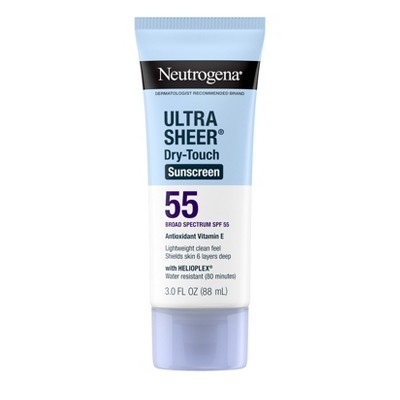
Look, not everyone wants to spend $35+ on sunscreen — and honestly, you don't have to. Neutrogena Ultra Sheer has been a drugstore staple for years because it genuinely works. The "dry-touch" formula lives up to its name: it absorbs fast and leaves a matte-ish finish that doesn't feel like you smeared Vaseline on your face. At under $12 for 3 oz, you can actually afford to apply the right amount (which most people don't do with expensive sunscreens).
In our testing, it performed nearly as well as the EltaMD in terms of daily wearability. The finish isn't quite as elegant — there's a slight tackiness for the first couple minutes — but it settles nicely. It does have a mild sunscreen scent that fades within 10 minutes. Under makeup, it's decent but not as smooth as the Supergoop. For the price though, it's genuinely hard to complain. This is the sunscreen I keep in my gym bag and my car.
Key Specs
- SPF: 55 (broad-spectrum)
- Type: Chemical
- Size: 3 oz
- Key ingredients: Avobenzone, homosalate, octisalate
- Finish: Dry-touch matte
- Water-resistant: 80 minutes
Pros
- Unbeatable value — under $12 for 3 oz
- Matte dry-touch finish absorbs quickly
- Higher SPF 55 for extra protection
- 80-minute water resistance
Cons
- Slight sunscreen scent (fades quickly)
- Can pill under heavy makeup layers
La Roche-Posay Anthelios Melt-In Milk SPF 60
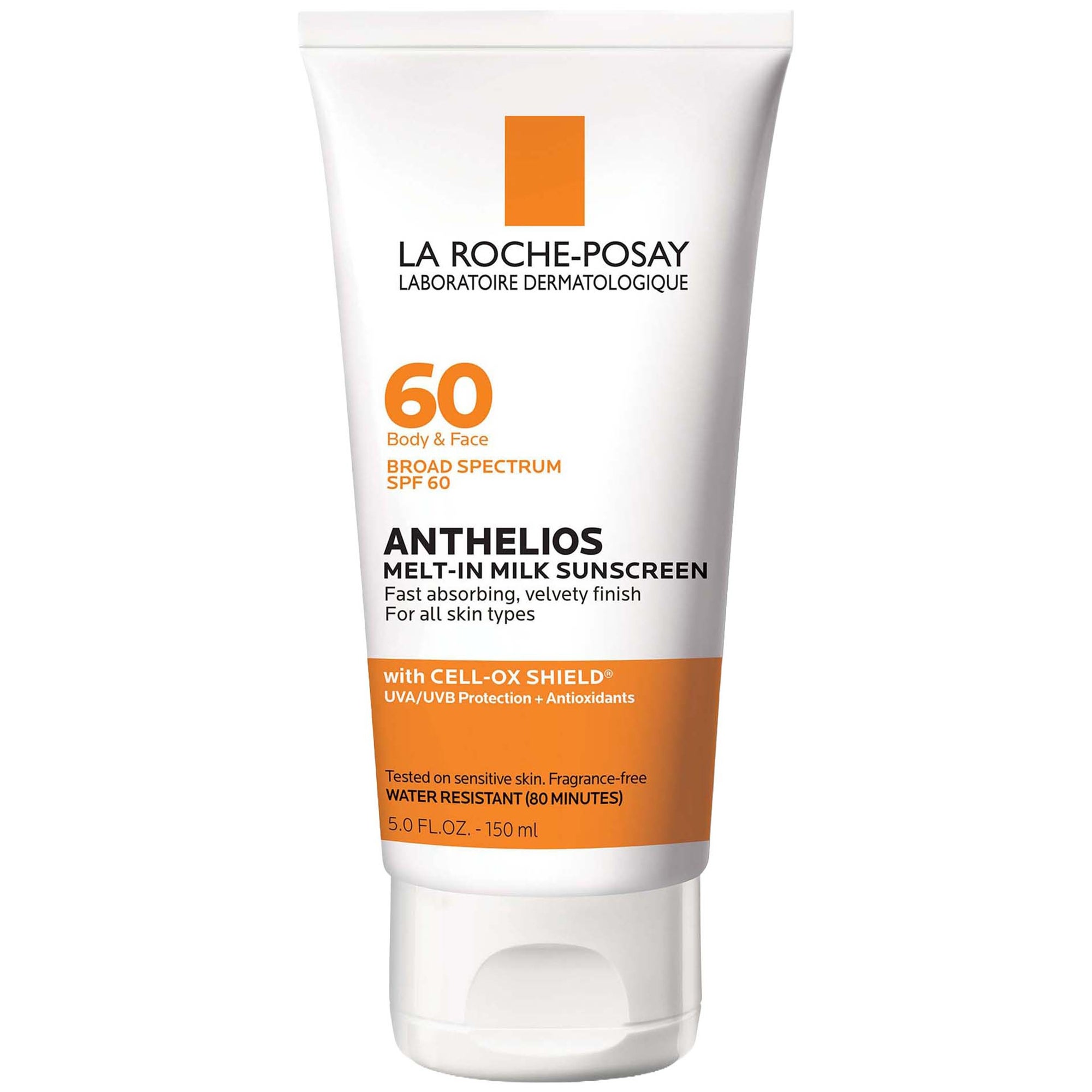
Our tester with rosacea and eczema-prone skin tried nine sunscreens during this review, and this was the only one that caused absolutely zero irritation over two full weeks of daily use. La Roche-Posay's Anthelios line uses their proprietary Cell-Ox Shield technology, and the "melt-in milk" texture is exactly what it sounds like — it starts as a light lotion and literally melts into your skin as you blend it. No stinging around the eyes, no tightness, nothing.
At SPF 60, it also offers the highest protection level on this list, which matters if you're on retinoids or have post-procedure skin that's extra vulnerable to UV damage. The finish is slightly dewier than the EltaMD — not greasy, but you'll notice a healthy glow rather than a matte look. If your skin freaks out at everything, stop experimenting and just get this one. It's worth every penny for the peace of mind alone.
Key Specs
- SPF: 60 (broad-spectrum)
- Type: Chemical
- Size: 5 oz
- Key ingredients: Cell-Ox Shield, La Roche-Posay thermal spring water
- Finish: Dewy, lightweight
- Water-resistant: 80 minutes
Pros
- Zero irritation on rosacea and eczema-prone skin
- Highest SPF on our list (60)
- Melt-in texture blends effortlessly
- Generous 5 oz size for the price
Cons
- Dewier finish may not suit oily skin
- Slight white cast on deeper skin tones
Australian Gold Botanical Tinted Face Sunscreen SPF 50
If you want sunscreen that doubles as a light foundation on no-makeup days, Australian Gold's tinted formula is the one. It comes out of the tube with a warm, medium-toned tint that blends into a natural, skin-evening finish — kind of like a BB cream but with serious SPF 50 mineral protection. On days when I just want to look polished without a full face, I reach for this one. Two pumps, blend with fingers, done.
The formula is 100% mineral (titanium dioxide and zinc oxide), which means it sits on top of your skin rather than absorbing in. That makes it ideal if you prefer a physical blocker, but it does mean the texture is thicker than chemical options. The tint helps counteract the white cast that mineral sunscreens are notorious for, and it does a decent job — though on very deep skin tones, it can still look slightly ashy. The matte finish is the real star here: it controls oil for a good 5-6 hours without looking cakey.
Key Specs
- SPF: 50 (broad-spectrum)
- Type: Mineral (titanium dioxide + zinc oxide)
- Size: 3 oz
- Key ingredients: Kakadu plum, eucalyptus, red algae
- Finish: Tinted matte
- Water-resistant: 80 minutes
Pros
- Gorgeous tint replaces light foundation
- 100% mineral formula — reef-safe
- Excellent matte finish that controls oil
- Rich in antioxidant botanicals
Cons
- Limited shade range (one universal tint)
- Thicker texture than chemical sunscreens
- Can look ashy on deep skin tones
Facial Sunscreen Buying Guide: What to Look For
1. Chemical vs. Mineral: Which Is Right for You?
Chemical sunscreens (like avobenzone) absorb UV rays and tend to feel lighter. Mineral sunscreens (zinc oxide, titanium dioxide) sit on top and physically block rays — better for sensitive skin, but often thicker. Hybrids like EltaMD give you the best of both worlds.
2. SPF Number: Does Higher Always Mean Better?
SPF 30 blocks about 97% of UVB rays. SPF 50 blocks 98%. SPF 100 blocks 99%. The jumps get smaller as the number climbs. For daily use, anything SPF 30-50 is more than enough — what matters more is that you apply enough and reapply every 2 hours in direct sun.
3. The Finish Matters More Than You Think
A sunscreen you hate wearing is a sunscreen you'll skip. If you have oily skin, look for matte or dry-touch formulas. Dry skin? Go for something with hyaluronic acid or a dewier finish. The best SPF is the one you'll actually put on every day.
4. Check for "Broad-Spectrum"
SPF only measures UVB protection. "Broad-spectrum" means it also guards against UVA rays, which cause premature aging and deeper skin damage. Every sunscreen on our list is broad-spectrum — never buy one that isn't.
5. Fragrance and Irritants
If you have sensitive or acne-prone skin, always choose fragrance-free. Watch for alcohol denat high on the ingredient list — it can dry out skin over time. All our top picks are either fragrance-free or have minimal, non-irritating scent profiles.
Frequently Asked Questions
Do I really need sunscreen every single day, even indoors?
If you're near windows, yes. UVA rays penetrate glass, and they're the ones responsible for premature aging and hyperpigmentation. If you work from home next to a window, daily SPF on your face is still worth it. On days when you genuinely don't leave the house and aren't near windows, you can probably skip it.
How much sunscreen should I actually apply to my face?
About a nickel-sized amount, or roughly 1/4 teaspoon. Most people apply way too little and only get a fraction of the labeled SPF. This is one reason we like affordable options like Neutrogena — when sunscreen is cheap, you're more likely to use enough of it.
Can sunscreen cause breakouts?
Yes, if the formula isn't right for your skin. Heavy, occlusive sunscreens can clog pores. Look for labels that say "non-comedogenic" or "oil-free." EltaMD UV Clear and Supergoop Unseen are both excellent for acne-prone skin — we tested them specifically for this.
What's the difference between EltaMD and Supergoop?
EltaMD UV Clear is a lightweight hybrid (chemical + mineral) with skincare benefits from niacinamide — best for improving skin while protecting it. Supergoop Unseen is a pure chemical formula with a silicone-primer texture — best as a makeup base. Both are excellent; choose based on whether you prioritize skincare (EltaMD) or makeup wear (Supergoop).
Our Final Recommendation
For most people, the EltaMD UV Clear SPF 46 is the best daily facial sunscreen you can buy. It works on every skin type we tested, improves your skin while protecting it, and feels genuinely pleasant to wear. If you're on a budget, Neutrogena Ultra Sheer gets you 90% of the way there at a third of the price.
The most important thing? Just wear sunscreen. Every day. Your 40-year-old self will thank you.