Best Dog Harnesses for Walking (2026): Top Picks for Control, Comfort & Safety
Quick Comparison
| Model | Type | Best For | Rating |
|---|---|---|---|
| 🥇 Julius-K9 IDC Powerharness | Step-in vest | Overall best / durability | ★★★★★ |
| 🥈 PetSafe Easy Walk | Front-clip | Pullers | ★★★★★ |
| 🥉 Rabbitgoo No-Pull Harness | Dual-clip | Best value | ★★★★★ |
| Kurgo Tru-Fit | Step-in | Car travel + walking | ★★★★★ |
| Chai's Choice Padded | Vest | Small / senior dogs | ★★★★★ |
Table of Contents
How We Evaluated
We researched seven of the most popular dog harnesses on Amazon, analyzing fit, durability, escape-resistance, and owner feedback across thousands of reviews. Our key criteria:
- ▸Escape prevention: Can a Houdini dog get out of it? We looked at buckle quality and strap design closely.
- ▸Comfort: Padding, breathability, and chafe points — especially for dogs wearing it for hours.
- ▸Control: Front vs. back clip, handle placement, and pulling behavior.
- ▸Durability: Hardware quality, stitching, and how it holds up after months of daily use.
- ▸Ease of fitting: How fast can you put it on a wriggly dog?
Julius-K9 IDC Powerharness
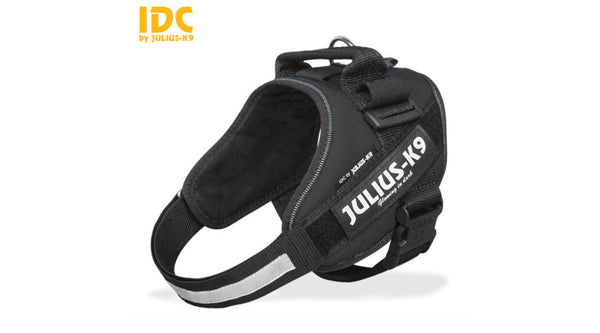
Originally developed for police and working dogs in Hungary, the Julius-K9 IDC Powerharness has become one of the world's most trusted dog harnesses for everyday owners too. It's built like a tank: heavy-duty nylon, reinforced stitching, and chunky side-release buckles that click solidly and don't fail. Dogs that escape other harnesses almost never escape this one.
The design is brilliantly practical — a top handle gives you instant control in traffic or when passing other dogs, the reflective trim is genuinely visible at night, and the Velcro patch on the side lets you attach custom ID labels (included). It fits a huge range of body shapes across 8 sizes, from small (mini) to XXL. Putting it on takes 5 seconds once your dog is used to it.
Key Specs
- Clip type: Back clip
- Sizes available: Mini to XXL
- Handle: Top grab handle
- Reflective strips: Yes
- ID patch: Velcro-attach (included)
- Material: Heavy-duty nylon
Pros
- Exceptional build quality — lasts years
- Extremely escape-proof design
- Top handle for quick control
- 8 sizes fit almost any dog
- Reflective for nighttime safety
- Velcro ID patch is genuinely useful
Cons
- Back clip only — not ideal for strong pullers
- Pricier than budget alternatives
- Sizing can run small — measure carefully
PetSafe Easy Walk Harness

If your dog drags you down the street, the PetSafe Easy Walk solves the problem without training collars or pain. The front chest clip redirects your dog sideways when they pull — instead of moving forward, they turn toward you. Most dogs learn within a few walks that pulling doesn't get them anywhere. It's one of the most effective no-pull solutions available.
The martingale loop at the chest tightens slightly when the dog pulls and releases when they walk calmly — this negative reinforcement happens naturally without any correction from you. The harness is lightweight, comes in 6 sizes and 6 colors, and fits most body types. It's not the most durable harness on this list, but for behavior management, nothing works better at this price point.
Key Specs
- Clip type: Front clip (chest)
- Sizes: XS to XL
- Martingale loop: Yes
- Colors: 6 options
- Material: Nylon webbing
Pros
- Dramatically reduces pulling — often immediately
- Front clip redirects without pain or correction
- Affordable and widely available
- Easy to put on and adjust
Cons
- Not suitable as a standalone ID attachment point
- Chest strap can rub armpits on some dogs
- Less durable than Julius-K9 for heavy daily use
Rabbitgoo No-Pull Dog Harness
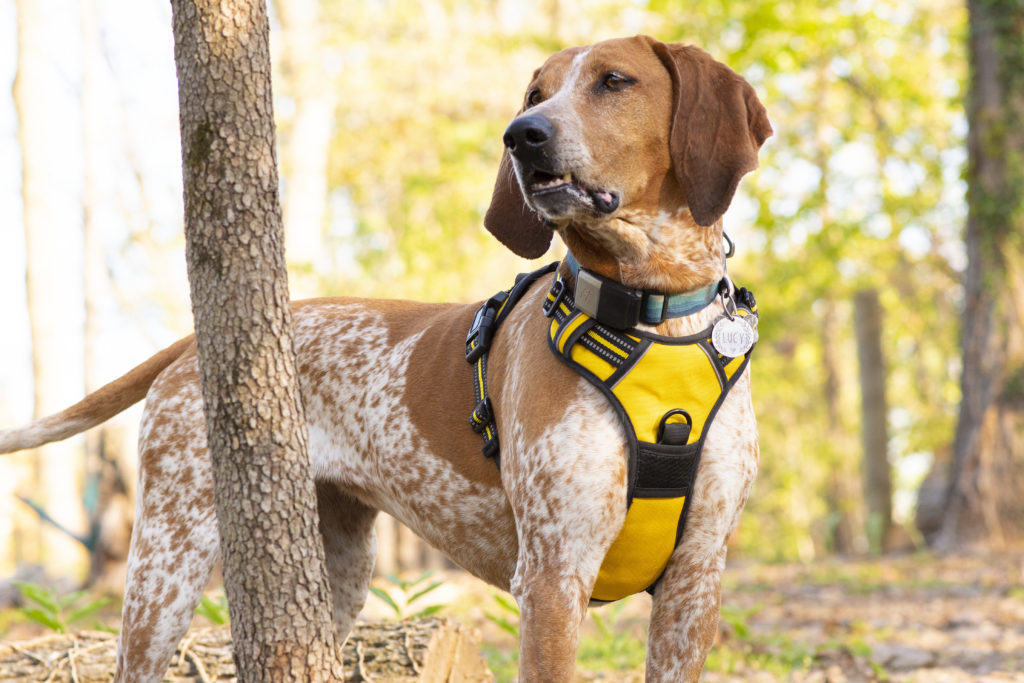
At around $20–25, the Rabbitgoo punches well above its price. It offers both front and back clip attachment points, padded chest and belly straps, and a top handle — features usually found on harnesses costing twice as much. The adjustable straps have 4 points of customization, making it surprisingly easy to get a snug, escape-resistant fit on differently shaped dogs.
The trade-off is durability — the hardware and stitching aren't as robust as the Julius-K9. For moderate walkers and calm dogs, it lasts well. For very strong or escape-prone dogs, you'll want to invest more. But for most people, especially those trying a harness for the first time, the Rabbitgoo is an excellent starting point.
Key Specs
- Clip type: Dual (front + back)
- Sizes: XS to XL
- Top handle: Yes
- Padding: Yes (chest + belly)
- Reflective strips: Yes
Pros
- Dual clip — use front or back depending on walk
- Padded for comfort on longer walks
- 4-point adjustable fit
- Very affordable — great first harness
- Top handle for quick control
Cons
- Hardware less durable than premium options
- Some dogs can still escape if very motivated
Kurgo Tru-Fit Smart Harness

The Kurgo Tru-Fit is the harness to get if your dog rides in the car regularly. It's crash-tested to withstand forces equivalent to a 30mph collision — one of the few dog harnesses with genuine safety certification data. A steel center ring attaches directly to your car's seatbelt, keeping your dog secure and preventing them from becoming a projectile in a sudden stop.
It doubles as a walking harness too, with a back clip D-ring for leash attachment. The 5-point adjustable design accommodates most body types, and the padded chest plate is comfortable for daily wear. At around $30–40, it's excellent value for dual walking/car use.
Key Specs
- Crash tested: Yes (30 mph)
- Seatbelt attachment: Steel center ring
- Walking clip: Back D-ring
- Sizes: XS to XL
- Padded: Yes (chest plate)
Pros
- Crash-tested — genuine car safety
- Works as both car restraint and walking harness
- Steel D-ring is very secure
- 5-point fit system accommodates many body types
Cons
- Bulkier than walking-only harnesses
- Back clip only for walking
Chai's Choice 3M Reflective Dog Harness

Small dog owners often struggle to find harnesses that fit well without chafing or twisting during walks. Chai's Choice nails this with thick padding, a padded belly strap, and proportionally sized hardware that doesn't overwhelm a 10-pound dog. The 3M reflective trim is one of the brightest we've seen — a real safety feature for evening walks.
It has both front and back D-rings, a top handle, and comes in sizes from XS (for dogs under 6 lbs) through large. The vest-style design distributes pressure evenly, which is especially important for dogs with trachea sensitivity — a common issue in brachycephalic breeds and toy breeds pulled by collars. Many senior dog owners choose this for comfort on slow, sniff-heavy walks.
Key Specs
- Clip type: Dual (front + back)
- Sizes: XS to L
- Padding: Heavy — chest + belly
- Reflective: 3M strips
- Top handle: Yes
Pros
- Heavily padded — ideal for small / senior dogs
- Excellent 3M reflective visibility
- Dual clip for flexible leash attachment
- Proportionally designed for small body types
Cons
- Not available in XL/XXL sizes
- Heavier padding may be too warm in summer
Dog Harness Buying Guide
1. Front Clip vs. Back Clip vs. Dual
Back clip harnesses are comfortable and easy to use but offer less control over pullers. Front clip harnesses redirect pullers sideways, discouraging the behavior — best for training. Dual clip harnesses give you both options and work for almost any situation. If you're unsure, go dual clip.
2. How to Size a Harness
Always measure your dog's girth (circumference of the widest part of the chest, just behind the front legs), not weight. Weight-based sizing charts are often inaccurate. A harness should allow 2 fingers to fit between the straps and your dog's body — snug but not tight. Deep-chested breeds like Greyhounds often need special sizing.
3. Escape-Proofing
If your dog has escaped harnesses before, look for designs with extra straps around the belly (not just the chest). The Julius-K9 and Rabbitgoo both use multi-point systems that are significantly harder to back out of. Avoid any harness where the only contact points are over the shoulders.
4. Material and Padding
For daily walkers, padded harnesses prevent chafing under the arms (axillary area) and chest. For adventure dogs or working dogs, un-padded nylon harnesses are lighter and dry faster. Check that the padding doesn't compress to nothing after a few weeks — dense foam holds up better than thin fleece lining.
Frequently Asked Questions
Are harnesses better than collars for walking?
For most dogs, yes. Collars concentrate pressure on the neck and trachea, which is harmful for pullers and dangerous for brachycephalic breeds (Bulldogs, Pugs, French Bulldogs). Harnesses distribute pressure across the chest and torso. Vets generally recommend harnesses for all dogs except those trained to heel perfectly.
Can my dog wear a harness all day?
It depends on the harness. Lightweight, well-fitting harnesses can be worn for extended periods, but most manufacturers recommend removing harnesses when your dog is unsupervised or sleeping. Harnesses can cause fur matting and skin irritation if worn 24/7, especially in damp conditions. Use a collar with ID tags for all-day wear and switch to the harness for walks.
My dog hates being harnessed. What can I do?
Start with a positive association: place the harness on the floor and let your dog sniff it, rewarding with treats. Gradually progress to placing it on your dog without fastening, then with fastening. Use high-value treats throughout. The step-in style (like the Julius-K9) is often less intimidating than over-the-head styles for reluctant dogs.
Julius-K9 vs. Ruffwear — which is better?
Both are excellent. Ruffwear (especially the Front Range and Web Master) is better for active outdoor dogs — hiking, trail running, water activities. The Julius-K9 IDC is better for everyday urban walking — it's easier to put on, has the practical ID patch, and is somewhat more affordable. If your dog is primarily a city walker, Julius-K9 wins. If they're an adventure dog, look at Ruffwear.
Our Final Recommendation
For most dog owners, the Julius-K9 IDC Powerharness is the safest, most durable everyday harness available. If your dog pulls, add the PetSafe Easy Walk for leash training. On a budget, the Rabbitgoo covers all the essentials at a fraction of the cost.
A good harness makes every walk better — for you and your dog.