QingdaoShop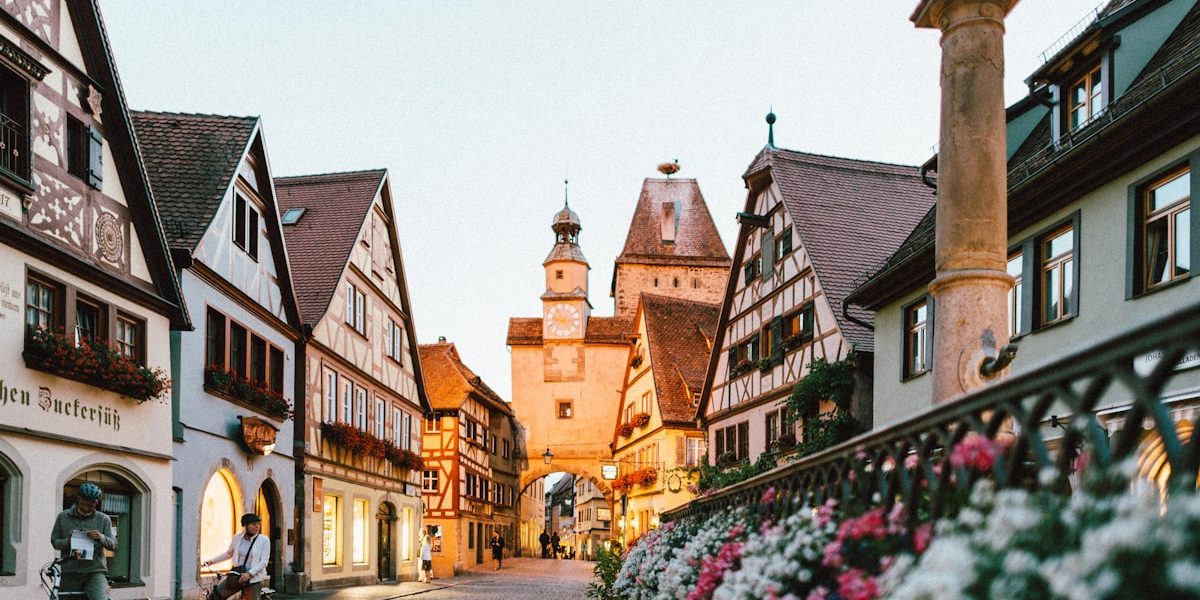
Walk through the streets of old Qingdao and you might forget you’re in China. Gothic church spires pierce the skyline, Bavarian-style villas line tree-shaded avenues, and the cobblestone lanes feel more like a small German town than a major Chinese port city. This remarkable architectural heritage dates back to 1898, when Germany leased the Qingdao region and spent 16 years transforming a quiet fishing village into a model European colonial city.
Today, Qingdao’s German Quarter is one of the best-preserved colonial-era neighborhoods in Asia — and it’s completely walkable. Here’s your self-guided tour through more than a century of fascinating history.
A Brief History: How Germany Shaped Qingdao
In 1897, Germany used the murder of two missionaries as a pretext to seize Jiaozhou Bay. The following year, China formally leased the territory to Germany for 99 years. The Germans had ambitious plans: they would build a “model colony” showcasing German engineering, urban planning, and architectural excellence.
Over the next 16 years, German engineers laid out broad, tree-lined boulevards, installed modern sewage and water systems, and constructed hundreds of European-style buildings. They also founded the Tsingtao Brewery in 1903 — perhaps their most enduring legacy. The German period ended in 1914 when Japan seized the territory during World War I, but the architectural imprint remained permanently etched into the city’s landscape.
What makes Qingdao special is that these buildings weren’t just utilitarian colonial structures. They were genuine works of art — designed by trained European architects to showcase the full range of Western architectural styles. The result is a city that reads like an open-air textbook of European architecture.
Stop 1: St. Michael’s Cathedral (天主教堂)
Begin your walking tour at the most striking building in Qingdao. St. Michael’s Cathedral was designed by German architect Alfred Fräbel and completed in 1934 — making it one of the later colonial-era constructions. Its twin 56-meter spires dominate the old town skyline and are visible from all over the historic district.
The Romanesque and Gothic-inspired design features yellow granite walls, red roof tiles, and stunning stained-glass windows that cast colored light across the interior. The cathedral survived the Cultural Revolution largely intact — a remarkable stroke of fortune — and today hosts regular Catholic services alongside a steady stream of visitors and wedding photographers.
The small square in front of the cathedral is one of Qingdao’s most popular photography spots, especially at dusk when the warm stone glows golden.
📍 15 Zhejiang Road, Shinan District
💰 ¥10 entry
⏰ 8:00 AM – 5:00 PM (closed during services)
Stop 2: Former German Governor’s Residence (德国总督楼旧址)
A 10-minute walk uphill from the cathedral brings you to one of Qingdao’s most impressive colonial buildings. Perched on Signal Hill, this grand four-story villa was built between 1903 and 1907 as the official residence of the German Governor-General. The architecture blends Art Nouveau, Baroque, and Jugendstil elements, with ornate stonework, sweeping balconies, and a distinctive red-tiled tower.
The interior has been preserved as a museum showcasing period furniture, photographs, and artifacts from the German colonial period. The highlight is the panoramic view from the upper floors — red rooftops cascading down to the blue sea, with Zhanqiao Pier visible in the distance.
📍 26 Longshan Road, Shinan District
💰 ¥20 entry
⏰ 8:30 AM – 5:00 PM
Stop 3: Qingdao Protestant Church (基督教堂)
Nestled on a hillside along Jiangsu Road, this charming church was built in 1908 and features a stone bell tower with a working clock that still keeps time over a century later. The architectural style is German countryside Romanesque — simpler and more rustic than the grand Catholic cathedral, but equally beautiful in its own understated way.
The surrounding garden is a peaceful retreat from the busy streets below, and the church’s hilltop position offers lovely views over the old town rooftops. Like the cathedral, this church has become a popular wedding photography location.
📍 15 Jiangsu Road, Shinan District
💰 ¥10 entry
⏰ 8:30 AM – 5:00 PM
Stop 4: Badaguan Scenic Area (八大关)
Take a taxi or walk southeast along the coast to reach Badaguan — the crown jewel of Qingdao’s architectural heritage. This exclusive residential district was developed in the 1930s and contains over 200 villas in more than 20 different architectural styles, including German, Danish, Spanish, Russian, Japanese, and American designs.
The eight streets are named after famous Chinese mountain passes, and each is planted with a different tree species: cherry blossoms on Zhengyangguan Road, crabapples on Ningwuguan Road, maples on Jiayuguan Road, and ginkgos on Zijingguan Road. This means each season brings a completely different color palette — pink in spring, green in summer, gold and red in autumn.
The most famous building in Badaguan is the Flower Stone Villa (花石楼), a granite castle perched on the cliffs. Built in 1930 with Russian-style architecture, it offers dramatic sea views from its turrets and terraces. Legend has it that Chiang Kai-shek once stayed here.
📍 Badaguan, Shinan District
💰 Free to walk; Flower Stone Villa ¥8
💡 Allow 1.5–2 hours for a relaxed walk
Stop 5: Qingdao Railway Station (青岛火车站)
Even if you’re not catching a train, the Qingdao Railway Station is worth seeing. The original German-designed station was built in 1901 in Art Nouveau style, with a distinctive clock tower and arched entrance. Though it was unfortunately demolished and rebuilt in 1991, the reconstruction faithfully replicated the original design, preserving the station’s historic character. The clock tower remains the most recognizable feature, rising above the platform just a short walk from Zhanqiao Pier.
📍 Tai’an Road, Shinan District
💰 Free (exterior viewing)
Stop 6: Tsingtao Brewery (青岛啤酒博物馆)
No tour of German Qingdao is complete without visiting the building that may be Germany’s most lasting gift to the city. The original 1903 brewery on Dengzhou Road — with its stone walls, industrial chimneys, and distinctly European factory architecture — now houses the Tsingtao Beer Museum. Even from the outside, the building is a beautiful example of early 20th-century German industrial design.
For the full story of Tsingtao Beer, see our complete Tsingtao Beer guide.
Walking Tour Map & Tips
Total walking distance: Approximately 6–8 km (depending on routes)
Time needed: 4–6 hours (with stops and entry to museums)
Best time: Spring (April–May) when the trees are in bloom, or autumn (October–November) for golden foliage
Practical tips: Wear comfortable walking shoes — the old town has many hills. Bring water and sunscreen in summer. Most sites accept mobile payment (WeChat/Alipay) but carry some cash for smaller vendors. The area around the cathedral and Zhongshan Road has many cafés if you need a rest stop.
Photography tip: The warm afternoon light (3–5 PM) is magical on the stone buildings. For the cathedral, morning light illuminates the front façade best.
More Qingdao Guides
Planning a full Qingdao trip? Check out our 3-Day Qingdao Itinerary and our guide to 10 Best Things to Do in Qingdao.
Have you explored Qingdao’s German Quarter? Which building impressed you most? Share your thoughts below!