QingdaoShop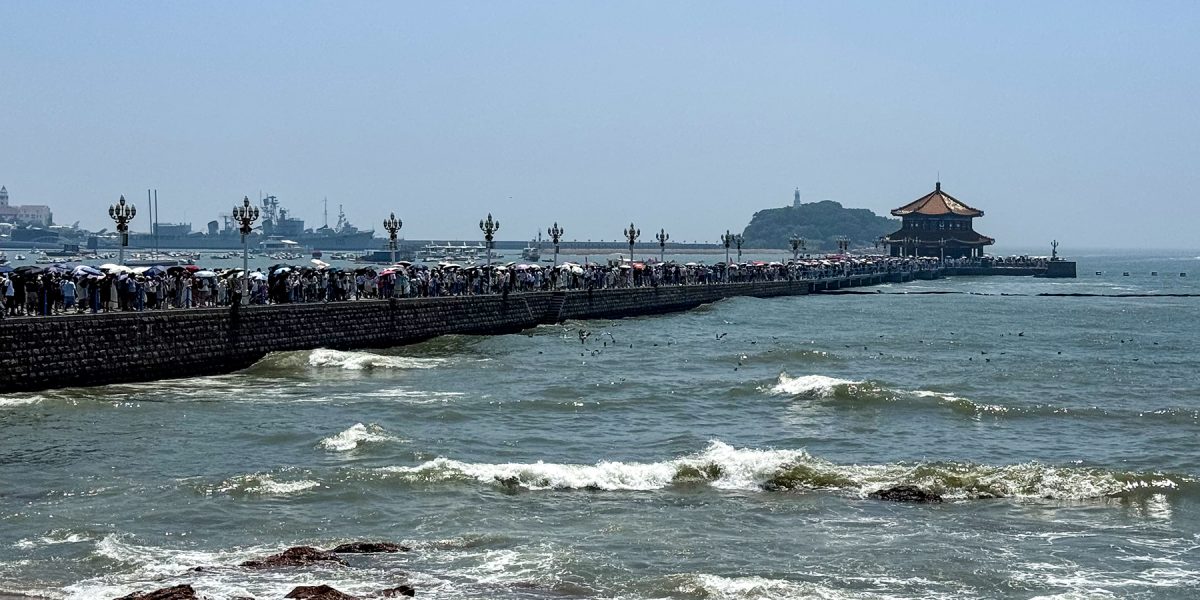
The first thing people notice in Qingdao isn’t a single landmark. It’s a kind of borrowed atmosphere: sea air braided with exhaust, the polite slope of a hill turning an ordinary walk into a small workout, and a pale light that seems to rinse the edges of buildings before it reaches the street. Even when the sky is bright, the city rarely feels flat. It’s always leaning—toward the water, toward older neighborhoods tucked behind a ridge, toward a newer skyline that appears and disappears depending on which corner you turn.
That lean is more than geography. Qingdao has a temperament built on edges: old and new, maritime and inland, leisurely and impatient. Visitors arrive looking for a seaside city and leave realizing they’ve been watching a city negotiate with itself. The most interesting part isn’t the postcard view; it’s the way Qingdao keeps changing the terms of what “seaside” means once you step away from the promenade.
To understand the city, it helps to start with a simple contradiction. Qingdao is famous for openness—wide water, long horizons, breezes that make even summer afternoons feel less oppressive than they should. Yet the daily rhythm of the city is defined by enclosure: narrow stair streets, courtyard entrances half-hidden by vines, a sudden corridor of shade between apartment blocks, the quiet pressure of traffic that makes you angle your shoulders and slip through gaps. It’s a coastal city that often behaves like a hillside town.
Where the sea is public, and where it isn’t
In many coastal cities, the waterfront is a promise you can’t quite redeem. Hotels block access, private clubs claim the best views, and the path along the water is more branding than belonging. Qingdao is not innocent of this—no modern city is—but it has a stubborn streak of publicness that keeps surfacing. A long stretch of coastline still functions like a shared living room. People wander without looking like they’re going anywhere in particular, and that purposelessness is a luxury the city quietly defends.
On a bright day, you can watch a whole sociology of leisure play out along the water. There are joggers who treat the sea as a metronome, older residents who move at a pace that refuses to be rushed, and families arranging themselves into temporary camps: folding stools, thermoses, fruit, and a bag of sunflower seeds that will last longer than anyone expects. The sea becomes less scenery than background music—something you don’t stare at for long, because you have your own business to conduct in front of it.
But the city also teaches you that “the sea” is not one thing. Some parts of the coast are performative: designed for looking, lined with photo-ready railings, full of the easy drama of waves against rock. Other parts are utilitarian and therefore more revealing. A short distance from the most celebrated viewpoints, you can find stretches where the water is treated almost like infrastructure, a boundary that shapes real estate and commuting patterns rather than romance. It’s not that one coast is authentic and the other isn’t; it’s that a city can’t survive on postcards alone.
What Qingdao offers—when it’s at its best—is a sense that the shoreline is a public argument. Should the coast be a stage or a corridor? A place to linger or a place to pass through? The answers change by neighborhood, by season, by time of day, and by the kind of person you are. The same curve of water can feel like respite in the morning and like pressure in the evening, when crowds build and the path turns into a slow-moving river of people with identical intentions.
That shifting meaning is part of the city’s education. You start to realize that a seaside identity isn’t guaranteed by proximity to water. It’s a set of habits: how people claim space, how they share it, how they permit strangers to be close without turning every interaction into a transaction. Qingdao’s coast—especially in the older parts of town—still carries that habit of shared use, even as development tries to tidy it into something more predictable.
And predictable is the one thing the city rarely feels. The water is constant, but the experience of it isn’t. When the wind comes off the sea, it can turn a sunny day sharp and almost metallic. In summer, the same wind can feel like mercy. In winter, it can be a lesson in humility, encouraging you to move faster, tuck your hands deeper into pockets, and accept that beauty has a temperature.
The light has its own logic too. Qingdao’s coastal light is different from inland brightness; it’s more reflective, more restless, as if the sea keeps rewriting the sky. Buildings near the water look temporarily cleansed, their surfaces softened by haze. The city’s famous red roofs seem less like a design choice and more like a practical response—warmth against the pale, a small refusal to be washed out.
Hills, corners, and the way neighborhoods explain themselves
Move inland and Qingdao’s story starts speaking in a different register. The city’s hills are not dramatic by mountain standards, but they are decisive. They break sightlines, interrupt grids, and create neighborhoods that feel like separate rooms connected by staircases. This is where the city’s character becomes more intimate. Streets narrow, cafés feel less like destinations and more like pauses, and the pace shifts from strolling to navigating.
In hillside cities, you learn quickly that maps are only partially useful. What matters is slope, wind, and where the sun falls. A road that looks short on a screen becomes a long conversation with gravity. A neighborhood that seems close becomes psychologically distant because you have to climb into it. Qingdao has plenty of flat areas, but the older textures often live on inclines, which makes them feel protected—sometimes from traffic, sometimes from attention, sometimes from the erasing forces of uniform renovation.
That protection is not romantic. It has consequences. Small businesses on a steep street depend on regulars who live nearby, because casual foot traffic doesn’t always make it up the hill. Deliveries become slower, and the everyday logistics of living take on a physical cost. Yet those costs also buy a kind of neighborhood loyalty. People recognize each other. A shopkeeper notices when you’ve changed your routine. Familiarity isn’t guaranteed, but it’s more available than it is in flat, fast cities.
One of Qingdao’s quiet skills is how it layers atmosphere without forcing it into a theme park. You can feel the city’s older European-era architecture in certain pockets, but it’s not sealed behind velvet ropes. It shares the block with convenience stores and schools and the occasional building that looks like it arrived late to the century. The past isn’t presented as a museum; it’s presented as an ongoing negotiation with practical needs. That’s why the city can feel both elegant and stubbornly ordinary in the span of a single intersection.
There’s also a particular kind of urban modesty in the way many streets behave. They don’t announce themselves. They don’t line up their best views at the beginning. Qingdao often makes you earn its beauty by walking through something plain first: a stretch of apartment walls, a busy road, an underpass, a knot of parked scooters. Then, without warning, a stairway opens into a small overlook, or a tree-lined lane suddenly turns quiet, and the city seems to exhale.
That exhale is what keeps many people attached to Qingdao even when they complain about it. The city can be crowded, and it can be noisy. Summers can feel like a festival you didn’t sign up for, with the beach becoming a public arena and the streets filled with the collective urgency of vacation. Yet the city is also full of corners where you can step aside. This is not a city that offers silence on demand, but it often offers the possibility of a softer volume if you’re willing to take a turn that looks unimportant.
Tourists and residents, of course, read the city differently. Visitors tend to chase the obvious: the shoreline, the historic façades, the headline views. Locals tend to chase the useful: the shortest route, the least crowded street, the familiar shop that doesn’t overcharge in peak season. But in Qingdao those two readings collide more gently than in some cities. The shared spaces—parks, coastal paths, small plazas—force a kind of coexistence. The city’s best places don’t belong exclusively to anyone, which can be frustrating, but also strangely democratic.
Still, there is tension. You can feel it in the way certain neighborhoods change their expression depending on the month. A street that feels local in April can feel performative in July, when every table is occupied and the menu becomes bilingual by necessity. A café that usually serves as a quiet refuge becomes a photo set. This is not unique to Qingdao, but the contrast is sharper here because the city’s identity is so tied to seasonal movement. The sea invites crowds the way a stage invites an audience.
The question Qingdao seems to ask—without ever putting it into words—is whether a city can remain itself while being watched. Some cities perform constantly and eventually forget they’re performing. Qingdao, at least so far, seems to retain a private self beneath the public face. You can sense it in the weekday mornings when the coast is still, the air smells faintly of salt and bread, and people walk with the unhurried purpose of living rather than visiting.
That private self is not defined by secrecy; it’s defined by routine. The city’s most convincing beauty is repetitive, almost understated: the regular return of light on water, the reliable presence of hills, the way tree-lined streets hold a little coolness even when the sun is aggressive. Qingdao doesn’t need a special event to be itself. It needs only the ordinary permission to continue.
If there’s a lesson here for anyone trying to understand the city, it’s not about what to do or where to go. It’s about paying attention to how the city moves between openness and enclosure. The sea is a public promise, but the hills remind you that daily life happens in smaller rooms. The coast teaches shared leisure; the back streets teach endurance and familiarity. Qingdao’s charm isn’t a single mood—it’s the ongoing conversation between those moods.
When you leave the water behind and climb into the city, you don’t abandon the seaside. You carry it with you as a kind of reference point. You notice how the air changes, how the light dulls slightly, how the wind behaves differently. You become aware that “seaside” is not only a location; it’s a way of measuring space and time. In Qingdao, that measurement keeps changing, and that change is what makes the city feel alive rather than curated.
Qingdao will continue to modernize, and some corners will inevitably lose their roughness. Certain views will become more expensive. Some stretches of coast will feel more managed. Yet it’s hard to imagine the city ever becoming completely smooth. The hills are too insistent for that. The sea is too public, too loud in its quiet way. And the city’s habit of offering beauty after a plain stretch of street feels like a personality trait rather than an urban plan.
There are cities that overwhelm you with spectacle, and there are cities that seduce you with convenience. Qingdao does something subtler. It teaches you to accept an identity made of edges: a city that leans toward the water while keeping a private life uphill, a city that welcomes an audience without fully turning itself into a show. If you notice that tension—and don’t rush to resolve it—you end up seeing Qingdao not as a destination, but as a place that keeps adjusting its posture, like someone shifting in a chair to stay comfortable, refusing to hold a perfect pose for too long.