QingdaoShop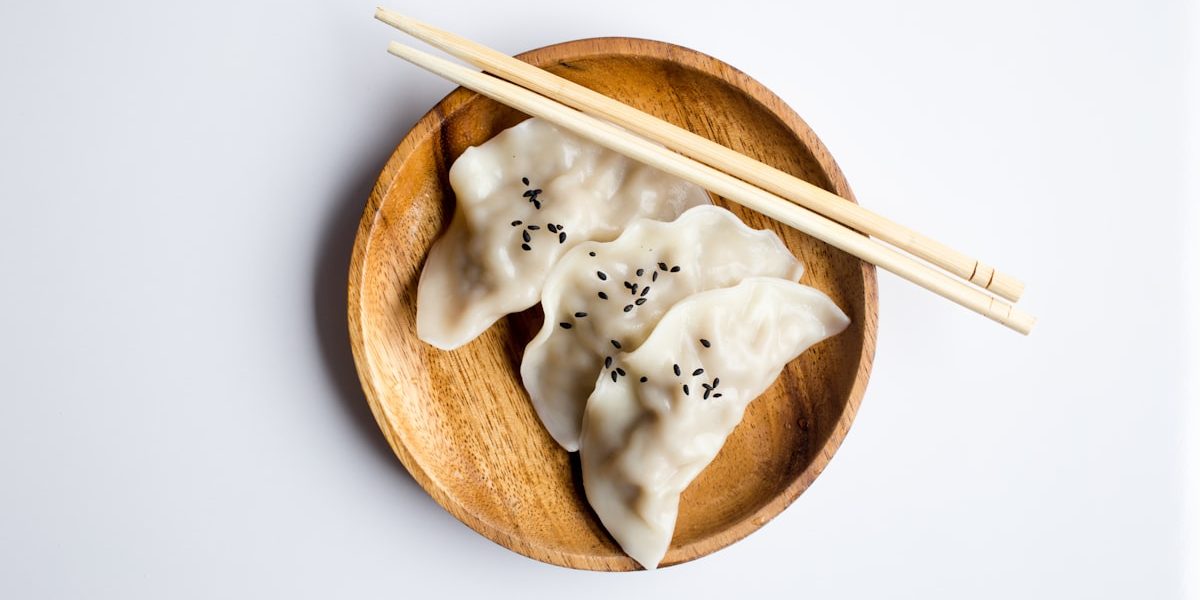
More Than Just Dumplings
Ask someone to name a Chinese food and there’s a good chance they’ll say “dumplings.” Fair enough — but calling all Chinese dumplings the same thing is like calling every type of pasta “noodles.” The dumpling family in Chinese cuisine is enormous, varied, and deeply regional. A jiaozi from Northeastern China, a xiaolongbao from Shanghai, a har gow from Guangdong, and a shaomai from Inner Mongolia share a basic concept — filling wrapped in dough — but they’re as different from each other as ravioli is from pierogi.
This guide walks you through the main branches of the Chinese dumpling family tree, how they differ, and where to find the best of each. Think of it as your passport to one of the world’s most delicious food categories.
Jiaozi (饺子) — The Northern Classic
When most people picture Chinese dumplings, they’re picturing jiaozi. A thin wheat-flour wrapper crimped into a crescent shape around a filling of minced pork and cabbage, chives, or other vegetables. They’re the most democratic dumpling — every family in northern China makes them, usually together around the kitchen table, and every family insists their version is the best.
Jiaozi come in three cooking styles. Boiled (水饺, shuǐjiǎo) is the most traditional — soft wrappers, juicy filling, eaten with a dip of black vinegar and chili oil. Pan-fried (锅贴, guōtiē) gives you a crispy golden bottom and a soft steamed top — the best of both worlds. Steamed (蒸饺, zhēngjiǎo) keeps things light and delicate.
The best jiaozi I’ve ever had were in Harbin, at a tiny restaurant where an 80-year-old woman rolled wrappers faster than I could eat them. The filling was pork and fennel — a Northern specialty that sounds unusual but tastes deeply savory and aromatic. She made each dumpling in about four seconds, and each one was perfect.
Classic fillings: Pork and napa cabbage, pork and chives, lamb and carrot (common in the north), shrimp and egg, three-fresh (pork, shrimp, and egg).
Xiaolongbao (小笼包) — Shanghai’s Famous Soup Dumplings
The dumpling that broke the internet. Xiaolongbao are thin-skinned steamed dumplings filled with seasoned pork and a hot, savory soup that forms inside during cooking. The trick is aspic — a gelatinous broth mixed into the filling that melts into liquid as the dumplings steam. Eating one requires a specific technique: place it on your spoon, bite a small hole in the skin, sip the soup, then eat the rest. Doing this without burning your mouth or squirting soup across the table is a skill that takes practice.
Shanghai is the homeland, and Din Tai Fung (originally from Taipei) popularized them globally, but some of the best versions are found at smaller shops. Jia Jia Tang Bao in Shanghai consistently has hour-long lines for a reason — their wrappers are impossibly thin (reportedly just 1.8mm) and the soup is intensely flavored.
Don’t confuse xiaolongbao with shengjianbao (生煎包), their pan-fried cousin. Shengjianbao are larger, thicker-skinned, and fried on the bottom until golden and crunchy. They’re messier, more substantial, and arguably more satisfying when you want something hearty.
Wontons (馄饨) — The Elegant Swimmers
Wontons are the aristocrats of the dumpling world — thinner skins, more delicate shapes, and always served in or with liquid. The wrappers are square (not round like jiaozi), which gives them their distinctive bonnet or nurse’s-cap shape when folded.
Styles vary dramatically by region. Cantonese wontons are small, filled with shrimp and pork, and served in a clear broth with thin egg noodles — this is the wonton soup you’ll find in Chinese restaurants worldwide, and when done well, it’s pure comfort. Sichuan chao shou (抄手) are bathed in fiery chili oil with vinegar and crushed peanuts. Shanghai large wontons are big, meaty parcels filled with pork and bok choy, closer to a main course than a side dish.
The best wontons have a wrapper so thin you can almost see the filling through it. When you pick one up with chopsticks, the skin should drape and flutter. If it holds its shape rigidly, the wrapper is too thick.
Baozi (包子) — The Steamed Bun Family
Technically not dumplings in the Western sense, but no guide to Chinese wrapped-filling foods is complete without baozi. These are steamed buns — fluffy, pillowy white dough wrapped around savory or sweet fillings. In northern China, baozi are breakfast. You grab a couple from a street vendor on your way to work, along with a cup of warm soy milk, and that’s your morning sorted.
Types to know:
Xianrou baozi (鲜肉包子) — The standard: pork filling with ginger and scallion. When the dough is light and slightly sweet and the meat inside is juicy, there’s nothing better for a cold morning.
Goubuli baozi (狗不理包子) — Tianjin’s famous brand, with 150 years of history. The name literally means “dog ignores” — the legend is that the original maker was so focused on his buns he ignored customers calling for him. The original shop in Tianjin is a tourist trap now, but the style — a small, precisely pleated bun with a thin skin — remains a benchmark.
Char siu bao (叉烧包) — Cantonese barbecue pork buns, either steamed (fluffy white, slightly sweet dough) or baked (golden, slightly crispy outside). The filling is sweet, sticky BBQ pork. These are a dim sum essential.
Liu sha bao (流沙包) — Salted egg yolk custard buns. Break one open and golden, molten custard oozes out. It’s dessert disguised as a bun, and it’s extraordinary.
Dim Sum Dumplings: The Cantonese Classics
Cantonese dim sum — small dishes served from carts in noisy teahouses — contains an entire galaxy of dumplings worth knowing.
Har gow (虾饺) — Crystal-skinned shrimp dumplings. The translucent wrapper, made from wheat starch, should have exactly seven to ten pleats (traditionalists count) and contain whole shrimp that snap when you bite. This is the single most important dish for judging a dim sum restaurant’s quality.
Siu mai (烧卖) — Open-topped dumplings filled with pork and shrimp, topped with a dot of crab roe or carrot. The filling should be slightly bouncy, not mushy.
Cheung fun (肠粉) — Wide rice noodle sheets rolled around shrimp, beef, or char siu, then drenched in sweet soy sauce. Technically not a dumpling, but the rolling-and-filling principle puts them in the family.
Feng zhua (凤爪) — Steamed chicken feet in black bean sauce. Not a dumpling either, but so central to dim sum that leaving them out feels wrong. The gelatinous skin and tiny bones are an acquired texture, but the flavor — garlicky, slightly sweet, deeply savory — wins most people over.
Regional Specialties Worth Seeking Out
Shaomai from Hohhot, Inner Mongolia — Forget the Cantonese siu mai you know. These are large, open-topped dumplings filled with chopped mutton and onion. The wrapper is thin as paper and pleated to look like a flower. They’re served with vinegar and eaten by the steamer-full, usually for breakfast. Mutton-loving travelers will be in heaven.
Bian shi from Fujian (扁食) — Tiny, delicate wontons filled with a paste of minced pork that’s been pounded smooth. Served in a clear soup with seaweed and dried shrimp, they’re light, clean-flavored, and utterly addictive.
Momos from Tibet and Yunnan — Dumplings filled with yak meat or vegetables, steamed or fried, served with a spicy dipping sauce. The Himalayan cousin of Chinese dumplings, with a hearty, high-altitude character.
Tangbao from Jiangsu (汤包) — Giant soup dumplings, sometimes as big as a softball, that you drink from with a straw before eating the skin and filling. They hold far more soup than xiaolongbao and are a real spectacle.
Making Dumplings at Home
Homemade jiaozi are easier than you think and make a fantastic group activity. The basic dough is just flour and water — mix, knead, rest, roll into small wrappers. The filling is endlessly customizable. Start with the classic pork-and-cabbage combination: finely chopped napa cabbage (salted and squeezed to remove excess water), minced pork, ginger, soy sauce, sesame oil, and a splash of Shaoxing wine.
The wrapping technique takes a few tries to master — put a tablespoon of filling in the center, fold in half, and pinch-pleat one edge while pressing the other edge flat. Your first few will be ugly. By the twentieth, you’ll have the rhythm. By the fiftieth, you’ll be making them with your eyes closed.
In Chinese families, making dumplings together is a bonding ritual, especially during Chinese New Year. The shape is said to resemble ancient gold ingots, symbolizing wealth. Some families hide a coin inside one dumpling — whoever finds it will have a lucky year.
Want to make authentic dumplings at home? Find premium dumpling wrappers, Shaoxing wine, and specialty ingredients at QingdaoShop.com — everything you need, delivered to your door.